


Copyright © 2026 Som Sapkota , All rights reserved. For content rights
Developed by : Namuna Computer
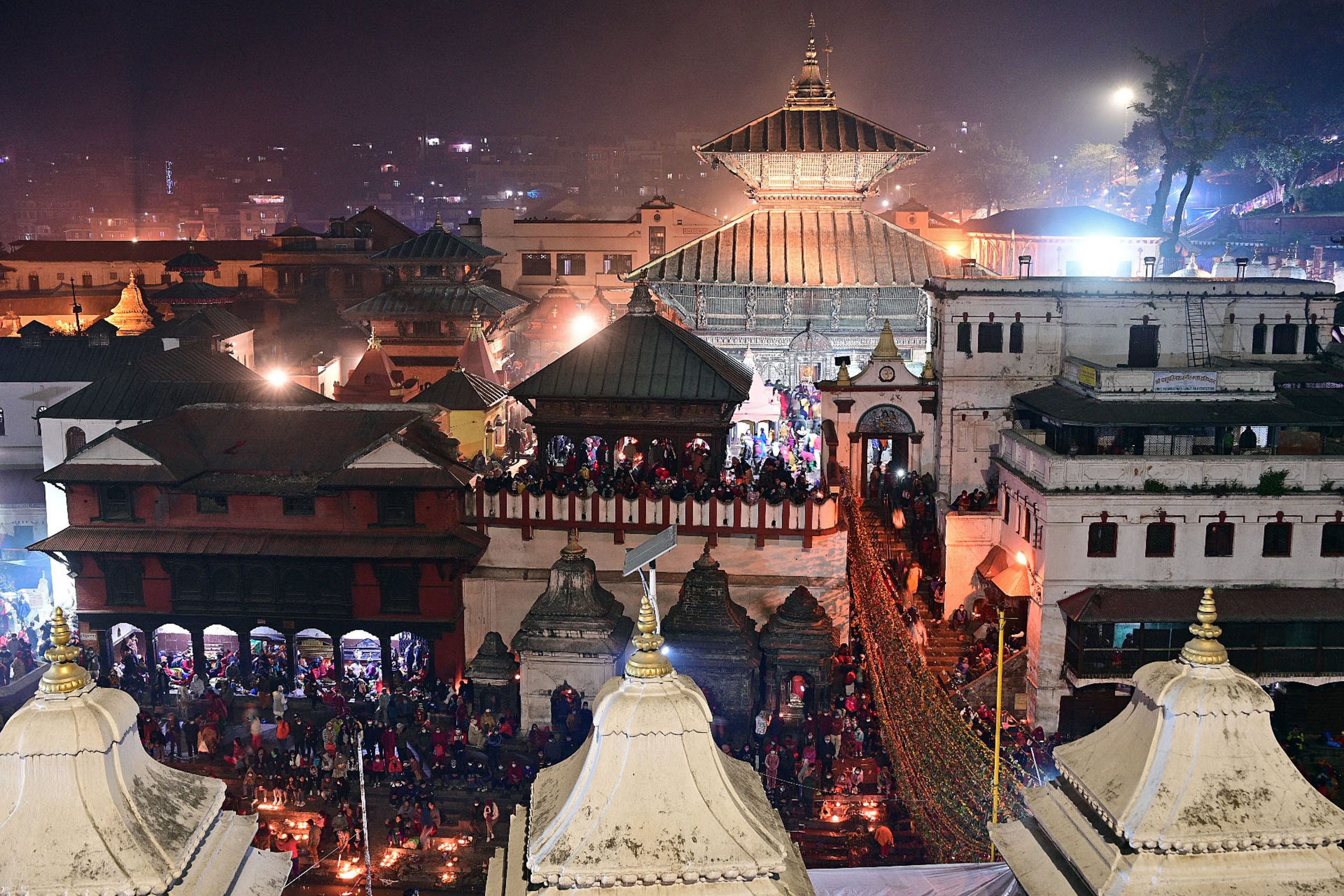
Maha Shivaratri, celebrated on 15th February 2026, is one of the most sacred and spiritually meaningful festivals in Hinduism. Dedicated to Lord Shiva, it is known as “The Great Night of Shiva,” a time when devotees come together in prayer, fasting, meditation, and devotion. Across Nepal, the festival is observed with deep faith, but nowhere is its spirit felt more strongly than at the holy Pashupatinath Temple in Kathmandu, one of the most revered temples of Lord Shiva and a UNESCO World Heritage Site. Every year, thousands of pilgrims from Nepal and around the world gather here to seek blessings and experience a powerful sense of spiritual connection.
For Maha Shivaratri 2026, the temple doors will open early at 2:00 AM, welcoming devotees from the quiet hours before dawn. From that moment, long lines of worshippers begin moving slowly toward the temple, many carrying offerings of flowers, milk, and sacred Bel leaves. Special arrangements have been made to manage the large crowds so that devotees can have a peaceful darshan throughout the day and night.
In the days leading up to the festival, the temple complex slowly transforms. Pilgrims, sadhus, families, and visitors arrive filled with anticipation. The fragrance of incense spreads through the air, temple bells ring continuously, and the sacred chant of “Om Namah Shivaya” echoes across the courtyard. These scenes beautifully reflect the devotion and unity of people preparing their hearts for this holy night.
The grand celebration is carefully organized by the Pashupati Area Development Trust, working together with government authorities and local organizations. Security personnel, volunteers, and health workers remain on duty to ensure safety and comfort for visitors. Free drinking water, medical assistance, sanitation services, and crowd-management systems are arranged so that the festival can be observed smoothly and respectfully.
In Hindu belief, Lord Shiva is seen as the ultimate yogi and the symbol of transformation. He represents the destruction of negativity and the beginning of renewal. Maha Shivaratri falls on the fourteenth day of the waning moon in the month of Falgun, a time believed to hold powerful spiritual energy. Devotees consider this night ideal for reflection, meditation, and inner awakening — a reminder that light can overcome darkness and wisdom can overcome ignorance.
Ancient legends add deeper meaning to the festival. Many believe Maha Shivaratri marks the divine marriage of Lord Shiva and Goddess Parvati, symbolizing harmony between consciousness and energy. Another story tells of Shiva’s cosmic dance, the Tandava, representing the endless cycle of creation and transformation. The story of Samudra Manthan, where Shiva drank deadly poison to save the universe and became Neelkantha, reminds devotees of his compassion and sacrifice.
Throughout the night, devotees observe fasting and perform abhishek, bathing the Shiva Lingam with water, milk, honey, curd, ghee, sugar, and sacred Bel leaves. Staying awake during the night is believed to bring spiritual awareness and peace. Midnight, known as Nishita Kaal, is considered the most sacred moment to offer prayers.

Mr. Som Nath Sapkota
Beyond its religious importance, Maha Shivaratri also brings people together and strengthens Nepal’s cultural identity. The festival attracts large numbers of visitors, supporting local communities while sharing Nepal’s spiritual heritage with the world. At the same time, it reminds everyone of the importance of caring for the environment and respecting sacred spaces.
In the end, Maha Shivaratri is more than a festival — it is a deeply personal spiritual journey. The gathering of devotees at Pashupatinath reflects faith, unity, and hope. As the holy night approaches, the temple once again shines with prayer and devotion, reminding us that through faith, transformation is possible and inner light can overcome all darkness.
Om Namah Shivaya.
By Som Nath Sapkota
International Tourism Promoter
Bharatpur Metropolitan City, Chitwan, Nepal
Source : nepalilink