

Copyright © 2026 Som Sapkota , All rights reserved. For content rights
Developed by : Namuna Computer
Som Nath Sapkota
Tourism Promoter for Wales – Ministry of Culture, Tourism and Civil Aviation
Nepal’s landscape is dotted with historic forts, locally known as Gadis, which stand silently as witnesses to the nation’s rich and turbulent past. Long before Nepal became a unified kingdom in the 18th century, countless small principalities, kingdoms, and local chiefdoms dotted the land. Each political unit built a fort—not only as a stronghold for defense but also as the center of governance, administration, and culture. These forts shaped military strategy, trade, and the cultural identity of their regions. They were often the heart of local governance, housing rulers, soldiers, and administrative officials, and sometimes hosting cultural and religious activities. Today, however, many Gadis lie forgotten, neglected, or in ruins.
Gorkha Gadi, located in Gorkha district, is more than just a fort; it is the birthplace of King Prithvi Narayan Shah and the epicenter of Nepal’s unification. From its walls, a fragmented land was brought together to lay the foundation of modern Nepal, making Gorkha Gadi a true symbol of unity and vision. Sindhuli Gadi tells a story of courage and strategy. In 1767, Nepalese forces here famously defeated the British East India Company, utilizing guerrilla tactics and intimate knowledge of the terrain. This victory is a proud reminder of Nepal’s resilience and military intelligence.
In Makawanpur district, Makawanpur Gadi was an important fort of the Sen dynasty. Situated along the strategic route connecting the Kathmandu Valley and the Terai plains, control over this fort was critical during the unification campaign. Its capture by the Gorkhali forces accelerated Nepal’s consolidation into a single nation. Similarly, Palpa Gadi in Tansen served as the administrative and cultural hub for the Sen kings, blending governance with diplomacy and art, reflecting the high level of administrative organization and cultural development in pre-unification Nepal.

The Chandragiri Gadi, perched on the western edge of Kathmandu Valley, kept watch over the valley’s entrances, while Nuwakot Gadi was strategically vital for trade between Tibet and the Kathmandu Valley and later served as a base during unification campaigns. In eastern Nepal, Dhankuta Gadi maintained regional authority and secured key hill trade routes, while smaller forts such as Ramechhap Gadi played an important role in local governance and protection.
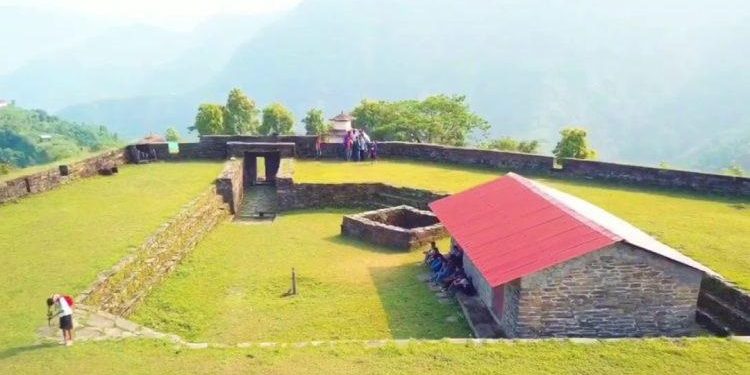
Uperdang Gadi in Chitwan, though lesser known, holds historical significance. Constructed by the Sen kings and later reconstructed by the Shah dynasty, it was the old district headquarters. Today, remnants of palaces, temples, cannons, and military quarters evoke the stories of a bygone era, inviting tourists and historians to explore its heritage. Beyond these well-known forts, districts such as Baitadi, Doti, Jumla, Dailekh, Achham, Bhojpur, Okhaldhunga, Ilam, Surkhet, and Dadeldhura host numerous other forts, many surviving only in oral histories or as place names. These forts remain largely unexplored, offering a rich field for research, cultural tourism, and local economic development.

Despite their importance, Nepal’s forts face serious preservation challenges. Natural decay from weathering, landslides, and erosion damages fragile structures. Expanding urbanization often encroaches upon or destroys fort sites. Many locals and authorities remain unaware of the cultural value of these forts, while restoration efforts are often underfunded or sporadic. Documentation gaps leave much of their history vulnerable to loss.
To safeguard these forts for future generations, Nepal must take proactive steps. Systematic research and documentation are essential to record the history, architecture, and stories of each fort. Restoration and conservation efforts should involve heritage organizations, universities, and international partners. Engaging local communities in preservation initiatives can increase awareness, pride, and tourism opportunities. Educational programs, heritage tours, and cultural interpretation centers can help younger generations appreciate the historical significance of Gadis. Finally, government policies and sustainable funding are critical to ensure long-term protection.
Nepal’s Gadis are living monuments of the country’s political, military, and cultural evolution. Preserving them is not merely about protecting stone and earth; it is about safeguarding memory, pride, and identity for future generations. By combining research, community involvement, policy support, and sustainable tourism, Nepal’s historic forts can once again become vibrant centers of knowledge, culture, and national consciousness, bridging the past with the present.


Source : uknepalpress