Just a short drive north of Kathmandu’s bustling city center, at the tranquil base of the Shivapuri Hills, lies Budhanilkantha, one of Nepal’s most revered religious sites. Here, in a serene pond surrounded by greenery and peace, rests a colossal image of Lord Vishnu, reclining on the coils of Shesha Nag, deep in divine slumber. Known as the Sleeping Vishnu, this ancient shrine is a spiritual magnet for both pilgrims and curious travelers seeking connection, culture, and calm.
A Marvel of Ancient Art and Faith
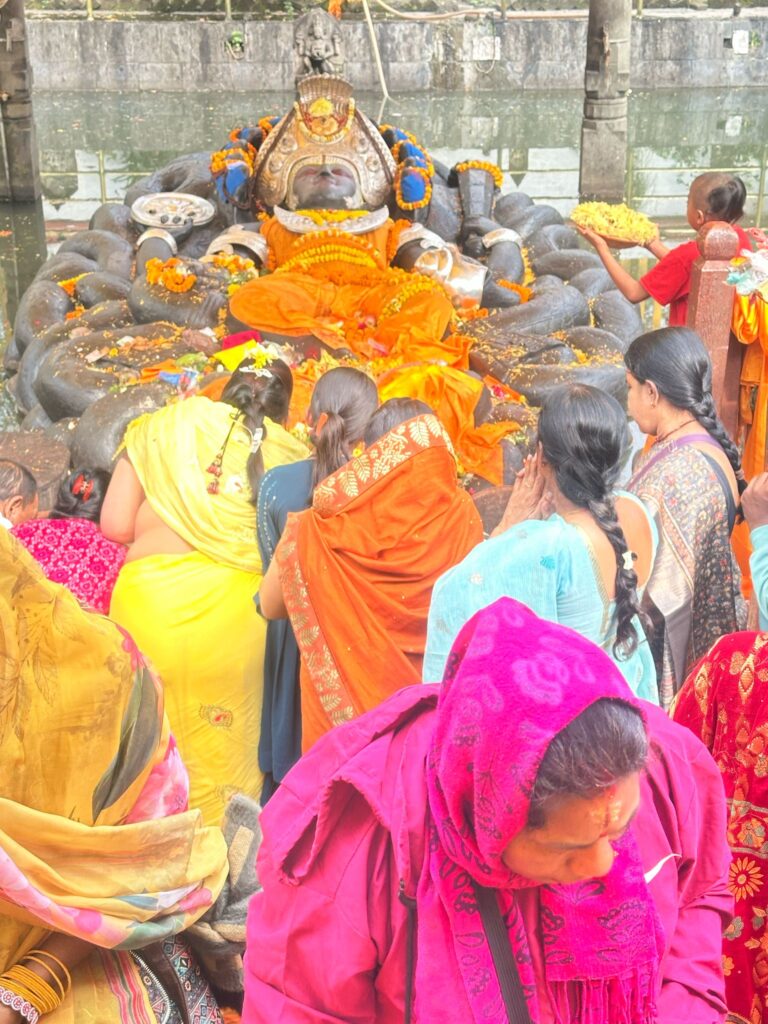
At the heart of the Budhanilkantha temple is a striking 5-meter-long black basalt statue of Vishnu lying supine on the snake-king Shesha. Floating in the water, the image represents Vishnu sleeping on the cosmic ocean (Kshira Sagar) between cycles of universal creation. The Lord’s four hands hold traditional symbols: the chakra, shankha, gada, and padma, representing divine power, purity, protection, and enlightenment.
This stunning statue, thought to date back to the 7th or 8th century, is a masterpiece of Licchavi-period craftsmanship and stands as a living testament to Nepal’s rich cultural and religious legacy.
The Sacred and the Symbolic
For Vaishnavite Hindus, Budhanilkantha is more than a shrine; it is a powerful spiritual portal. Vishnu’s cosmic rest is seen as a symbol of divine balance, a pause between action and renewal. Pilgrims believe that darshan here helps align the soul with universal order, bringing inner peace, prosperity, and spiritual clarity.
The Royal Prophecy and Its Legacy
Adding mystery to the site is a centuries-old prophecy: any reigning king of Nepal who visits Budhanilkantha will die. In reverence for this belief, Nepal’s monarchs historically avoided the shrine entirely. This unique tradition, respected throughout Nepal’s monarchical era, adds a profound air of sacred exclusivity and mysticism to the temple.
Haribodhini Ekadashi: Vishnu Awakens
The spiritual energy of Budhanilkantha reaches its peak during Haribodhini Ekadashi, celebrated in Kartik (October–November). This major festival marks the symbolic awakening of Lord Vishnu after a four-month cosmic sleep. Thousands of pilgrims flock to the site, offering prayers, lighting lamps, and singing devotional bhajans. The air fills with the sound of bells and chants, transforming the serene temple into a vibrant sanctuary of devotion and joy.
A Temple in Nature’s Embrace
Surrounded by the lush greenery of Shivapuri National Park, Budhanilkantha’s setting enhances its appeal as a place for quiet contemplation and spiritual reflection. The natural beauty, cool breeze, and calming sounds of nature make the experience more than a religious visit it becomes a holistic journey of the soul.
The temple grounds are well-kept, with simple yet meaningful rituals performed daily. Local caretakers and priests are often happy to share stories, scriptures, and the deeper philosophies associated with Lord Vishnu’s cosmic role.
Conclusion: A Soulful Journey
Budhanilkantha is a place where art, mythology, and spirituality come together in harmony. Whether you’re a devout pilgrim, a cultural explorer, or simply a seeker of peace, a visit here leaves you with something profound a sense of connection, reverence, and timeless serenity.
Budhanilkantha darshan is not just about seeing a statue; it is about feeling the stillness of the divine, embracing Nepal’s ancient traditions, and discovering the sacred that resides quietly in nature’s lap.
Written By: Som Nath Sapkota (Entrepreneur, Tourism Promoter, and Deputy General Secretary – NRNA ICC)